Introduction: Why an Automatic Water Filling Machine is the Heart of Your Bottling Line
In the competitive bottled water industry, efficiency and hygiene determine success. A water filling machine automates the critical process of filling bottles with purified, mineral, or spring water. Whether you are setting up a small local brand or expanding a large-scale production facility, choosing the right bottled water filling machine directly impacts your output, labor costs, and product safety.
This complete guide covers everything you need to know – from machine types and working principles to a detailed price comparison that helps you plan your investment. You will also learn about water bottling plant equipment integration, maintenance best practices, and modern trends. By the end, you will be ready to make an informed purchase decision.
1. What is an Automatic Water Filling Machine?
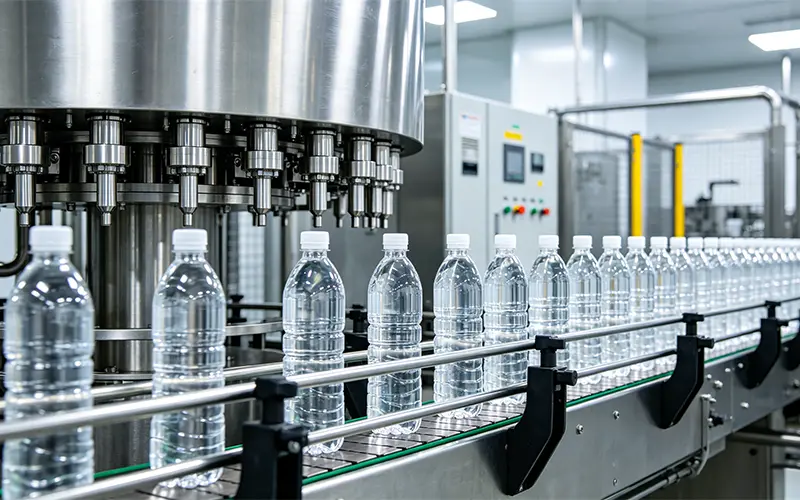
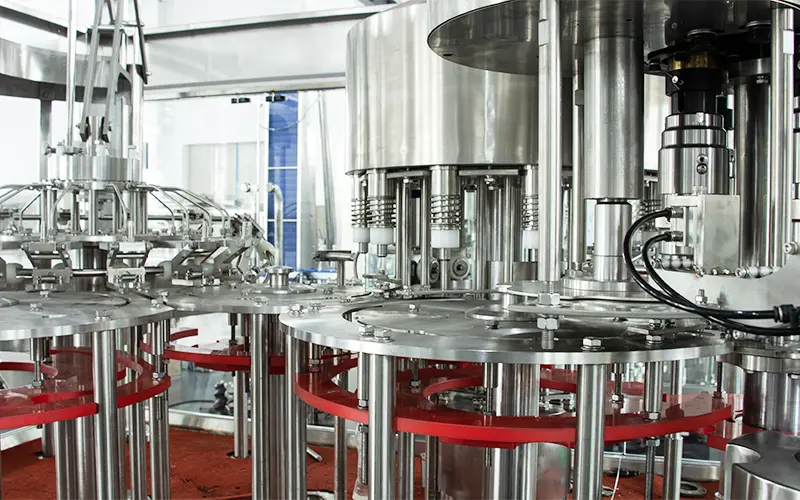
An automatic water filling machine is a precision device that fills pre-formed bottles (or containers) with water at high speed. Unlike semi-automatic units, fully automatic machines integrate rinsing, filling, and capping into a single continuous process – often called a 3-in-1 filling machine.
Key benefits:
- Speed: From 2,000 to 36,000 bottles per hour (BPH)
- Hygiene: Closed system prevents contamination
- Labor saving: Only 1-2 operators needed
- Consistency: Accurate fill level ±1 ml
2. Main Types of Automatic Water Filling Machines
Based on container type and filling principle, water filling machines fall into several categories:
By Container Type
- PET bottle filling machine (most common for 0.2L–2L)
- Glass bottle filler (premium water brands)
- Barrel filling machine (3–5 gallon for water coolers)
- Pouch filling machine (low-cost, single-serve)
By Filling Principle
| Type | Best for | Speed range |
|---|---|---|
| Gravity filler | Still water, low viscosity | 2,000–36,000 BPH |
| Pressure filler | Carbonated water, high-speed lines | 10,000–36,000 BPH |
| Vacuum filler | Hot filling (not common for water) | 4,000–12,000 BPH |
For 90% of bottled water filling machine buyers, a rotary gravity filler with electromagnetic flowmeter control offers the best price-performance ratio.
Read more about filling principles on ISO standards page
3. Core Components of a Water Filling Machine
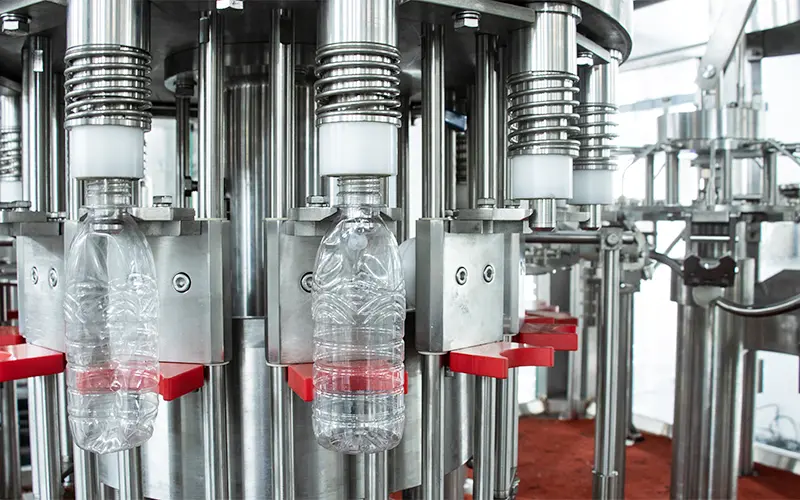
A high-quality water filling machine consists of these essential parts:
- Bottle rinser (with sanitizing spray)
- Filling bowl (stainless steel 304/316L)
- Filling valves (non-drip, spring-loaded)
- Capping turret (for screw caps, snap caps, or sport caps)
- PLC control panel (touch screen, recipe storage)
- CIP connection ports (clean-in-place)
- Variable frequency drive (adjustable speed)
4. Complete Water Bottling Plant Equipment – Beyond the Filler
A water filling machine does not work alone. A full water bottling plant equipment line includes:
- Water treatment system (sand filter, carbon filter, RO membrane, UV/ozone)
- Blow molder or bottle unscrambler
- 3-in-1 rinser-filler-capper (the core machine)
- Labeler (cold glue, self-adhesive, or shrink sleeve)
- Date coder / inkjet printer
- Shrink wrapper or carton packer
- Palletizer
Investment tip: Buying a complete line from one supplier ensures compatibility, better warranty, and easier maintenance.
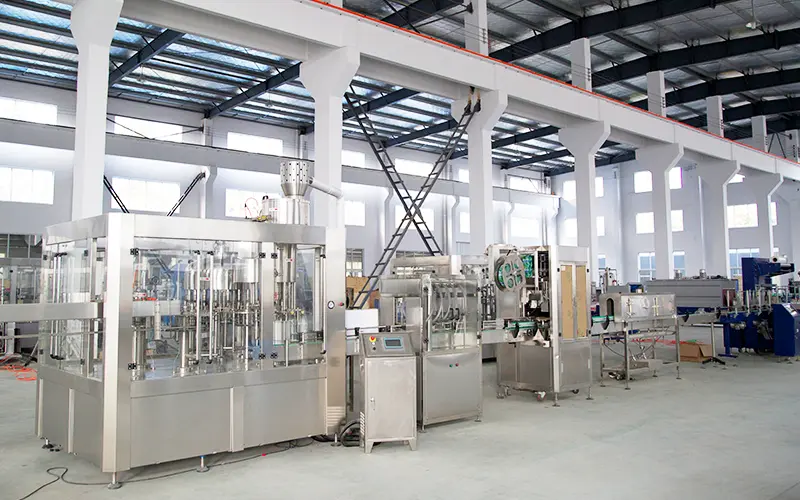
Check our recommended water bottling plant layout for 10,000 BPH
5. Automatic Water Filling Machine Price Comparison (2025-2026)
To help you budget, here is a realistic price comparison based on real quotes from Asian and European manufacturers. Prices are for fully automatic 3-in-1 machines (rinsing+filling+capping) – excluding water treatment and packaging.
| Capacity (BPH) | Machine type | Automation level | Price range (USD) | Typical origin |
|---|---|---|---|---|
| 1,000 – 2,000 | Linear filler | Semi-automatic | $8,000 – $15,000 | China / India |
| 3,000 – 6,000 | Rotary 3-in-1 | Fully automatic | $18,000 – $35,000 | China / Turkey |
| 8,000 – 12,000 | Rotary 3-in-1 | Fully auto + servo | $40,000 – $70,000 | China / Italy |
| 15,000 – 20,000 | High-speed rotary | Fully auto + CIP | $90,000 – $150,000 | Italy / Germany / China (top tier) |
| 24,000 – 36,000 | Ultra-high speed | Fully auto + AISI 316 | $180,000 – $350,000 | Germany / Italy |
Additional cost factors to consider:
- Stainless steel grade (304 vs 316L for corrosive water)
- CIP system (built-in or external)
- Spare parts kit (recommended 5-10% extra)
- Installation & commissioning ($5,000 – $20,000 depending on location)
- Training (usually included, but confirm)
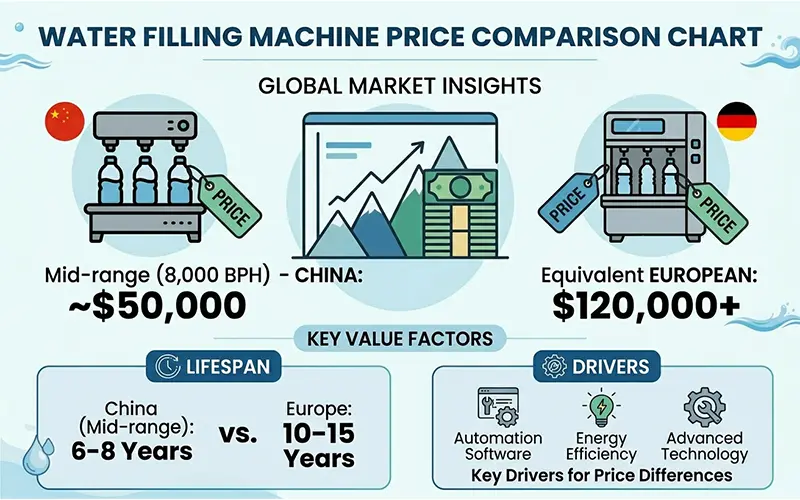
Price insight: A mid-range bottled water filling machine from China (8,000 BPH) costs around $50,000, while an equivalent European machine can be $120,000+. The difference comes from automation software, energy efficiency, and longer lifespan (10-15 years vs 6-8 years).
6. How to Choose the Right Bottled Water Filling Machine – 7 Key Factors
Before purchasing a bottled water filling machine, answer these questions:
- Desired output (bottles per hour) – Start with 30% future growth buffer.
- Bottle size range – Can the machine changeover between 0.33L, 0.5L, 1.5L, and 2L? Quick-change kits cost extra but save hours.
- Cap type compatibility – Screw caps, push-pull sport caps, tamper-evident bands.
- Water type – Still water → gravity filler; Carbonated water → pressure filler (higher cost).
- Available floor space – Rotary machines need 6m x 4m minimum for 6,000 BPH.
- Electrical and air supply – 380V/50Hz or 220V/60Hz? Air compressor 1.5–7.5 kW.
- Local service & spare parts – Ask for supplier’s local agent or stock of wear parts (seals, belts, valves).
Download our free checklist “How to Start a Bottled Water Business: Cost, Equipment & Production Line Guide”
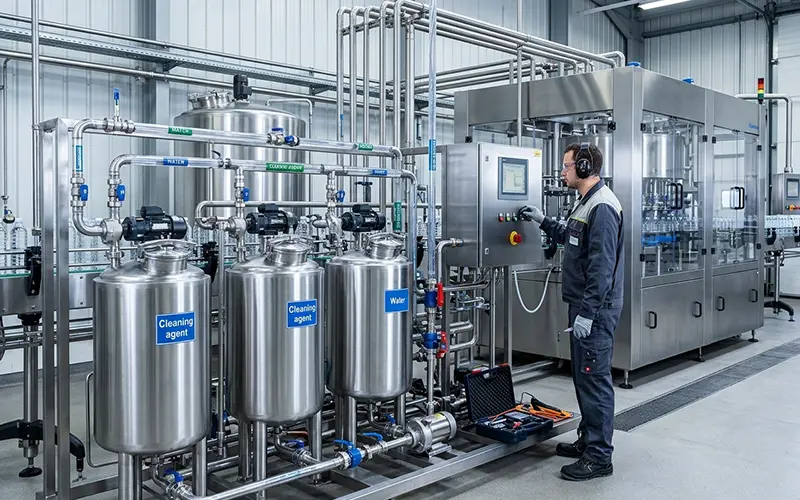
7. Installation, Maintenance & Troubleshooting
Daily maintenance
- Visual inspection of filling valves and cap chute
- Lubrication of conveyor chain
- Check bottle presence sensors
Weekly maintenance
- Clean filling bowl and nozzles with CIP solution
- Inspect sealing rings for wear
- Verify fill level accuracy with scale
Common issues & fixes
| Problem | Likely cause | Solution |
|---|---|---|
| Underfilled bottles | Clogged valve or low water pressure | Clean valve, check pump |
| Overfilled bottles | Worn level sensor | Calibrate or replace sensor |
| Loose caps | Wrong torque setting | Adjust capping head spring |
| High bottle breakage | Misaligned starwheel | Realign with manual |
8. Industry Trends: Smart & Sustainable Water Filling Machines
- IIoT-enabled machines – Real-time OEE tracking, remote diagnostics.
- Lightweight bottle handling – 30% thinner preforms require gentle handling.
- Water recycling – Reclaim up to 40% of rinse water.
- Energy-efficient motors – IE3/IE4 motors reduce electricity by 15-20%.
Future-proof your water bottling plant equipment by choosing a supplier who offers modular upgrades (e.g., adding a second capping type later).
9. Conclusion: Make a Smart Investment in Your Automatic Water Filling Machine
Investing in a high-quality automatic water filling machine is the fastest way to scale your bottled water business. By comparing prices across capacities and origins (Section 5), you can match your budget to realistic performance expectations.
Final recommendations:
- Under $30,000 → Chinese or Indian 3,000–6,000 BPH machine – good for startups.
- $50,000–$90,000 → Mid-tier Chinese or Turkish 10,000 BPH with CIP – best value.
- Above $150,000 → European high-speed line – for large brands requiring 24/7 operation.
Always request a video of the bottled water filling machine running your specific bottle size, and negotiate a spare parts kit and remote support in the contract.
Frequently Asked Questions (FAQs)
1. What is the price of a small automatic water filling machine?
A 2,000 BPH semi-automatic machine starts at $8,000, while a fully automatic 3,000 BPH unit costs about $18,000–$22,000.
2. Can one bottled water filling machine handle different bottle shapes?
Yes, if the supplier offers change parts (starwheels, guide rails). Quick-change systems take 20–40 minutes.
3. How long does a water bottling plant equipment line last?
With proper maintenance, stainless steel machines last 8–15 years. Seals and valves need replacement every 2-3 years.
4. Do I need a separate capping machine?
No. Most modern water filling machines are 3-in-1 (rinser-filler-capper). However, for very high speeds, separate units may be used.
5. Is training included in the price?
Usually for Chinese/Turkish suppliers: 1-2 technicians come for 5-7 days on-site. European suppliers often include training at their facility.