Want to improve efficiency and reduce waste? Learn how beverage filling machines work in modern production lines – from gravity and pressure filling to smart CIP systems. Get key buying tips, real ROI data, and how to choose a reliable beverage filling machine supplier and automatic beverage filling line.
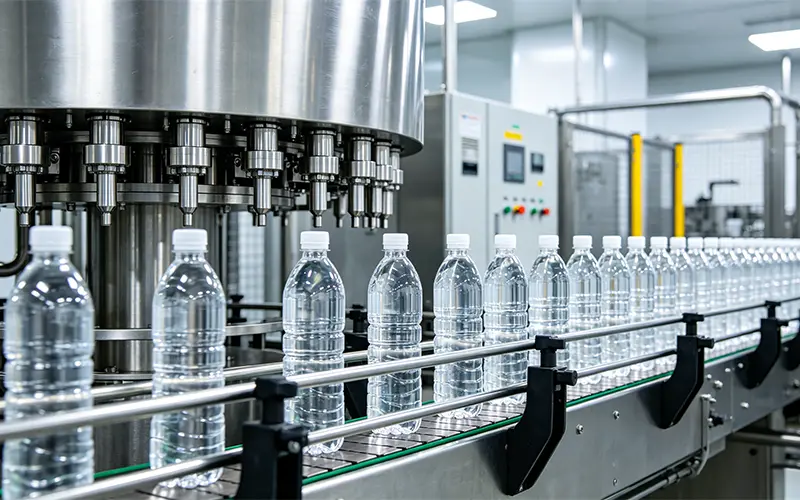
Introduction: Why Understanding Your Filling Machine Matters
Is your filling line holding you back? Inconsistent fill levels, product spillage, long changeover times, and high maintenance costs are just a few headaches that beverage producers face every day.
The global beverage filling machine market continues to grow steadily, reaching a multi-billion dollar scale. Whether you produce water, carbonated soft drinks, juices, or energy drinks, the heart of your production line is the beverage filling machine.
In this guide, you will learn:
- How three main filling principles work
- Modern smart features that cut waste and boost speed
- Why CIP/SIP systems and aseptic filling matter
- Real ROI data from actual plants
- How to choose a reliable beverage filling machine supplier
Let’s dive in.
1. The Three Core Principles: How Beverage Filling Machines Work
All modern automatic beverage filling lines rely on one of three fundamental filling methods. Understanding these will help you match the right technology to your product.
1.1 Gravity Filling – For Thin, Still Liquids
How it works:
Liquid flows by its own weight from an overhead tank into the bottle under normal atmospheric pressure. Two common variations are time-based and volume-based gravity filling.
Best for:
– Still water
– Tea
– Some low-viscosity juices
Key advantage: Simple construction, easy cleaning, low cost.
Limitation: Not suitable for carbonated or viscous products.
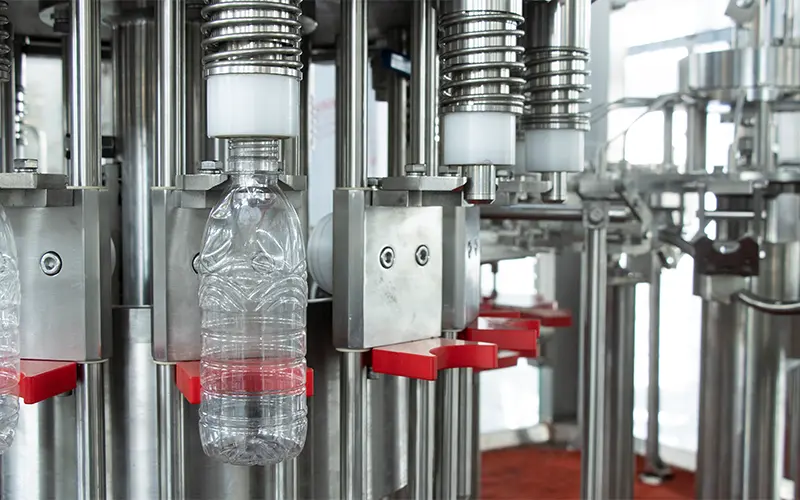
1.2 Pressure Filling – For Carbonated Drinks
How it works:
The bottle is first pressurized with CO₂ (equal to the tank pressure), then the filling valve opens. Liquid flows in while gas escapes back to the tank, maintaining carbonation. High-speed lines use isobaric (counter-pressure) filling, achieving speeds over 60,000 bottles per hour.
Best for:
– Beer
– Soda / sparkling water
– Carbonated energy drinks
Key advantage: Prevents CO₂ loss and foaming.
Modern improvement: Servo-controlled pressure filling reduces product waste to below 0.1%.
1.3 Vacuum / Negative Pressure Filling – For Viscous or Oxygen-Sensitive Liquids
How it works:
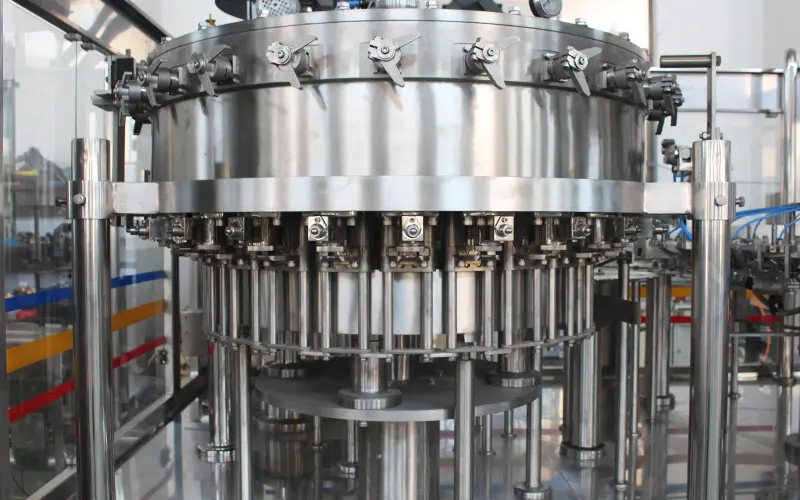
A vacuum (below atmospheric pressure) is drawn inside the bottle, and liquid is drawn in by the pressure difference. Vacuum filling and negative pressure filling are the same concept. Based on how the vacuum is applied, it can be divided into:
– Differential vacuum type: The liquid tank is at atmospheric pressure, only the bottle is evacuated. Suitable for high-viscosity liquids (oils, syrups).
– Gravity-vacuum type: Both the tank and bottle are under low vacuum, liquid flows mainly by gravity. Suitable for wine, juices, etc.
Micro-negative pressure filling is a special form of negative pressure filling with an extremely low vacuum level (gauge pressure approx. -0.03 to -0.02 MPa). It is often combined with isobaric technology for products that foam easily or require high fill-level accuracy (e.g., soy sauce, condiments). After filling, the micro-negative pressure sucks back liquid remaining in the return tube, preventing drips.
Best for:
– Juices, fruit pulps and concentrates
– Wine (reduces oxidation)
– Oils, syrups, soy sauce, vinegar
Key advantages: Wide viscosity range, reduced oxygen pickup, drip prevention.
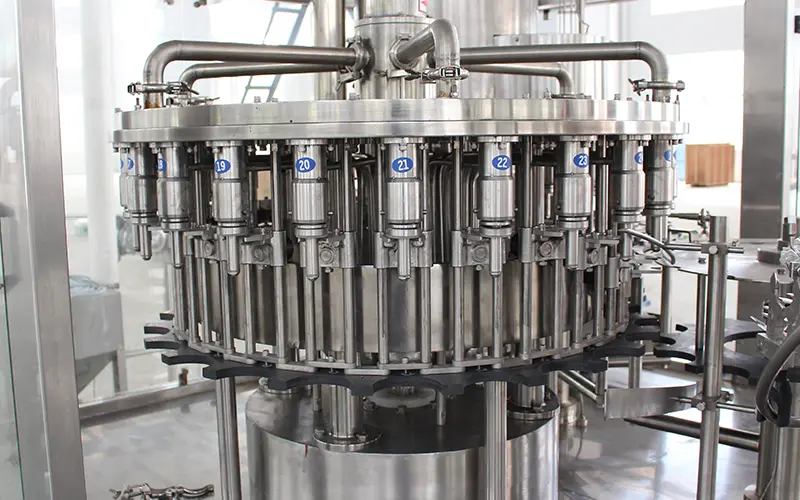
2. What Makes a “Modern” Beverage Filling Machine Stand Out?
Basic filling principles have existed for decades. Today’s advanced beverage filling machines integrate technologies that directly impact your bottom line.
2.1 Filling Accuracy – Every Milliliter Counts
Modern machines use mass flow meters or magnetic flow meters with real-time feedback. For example, according to official Sidel documentation, the Sidel EvoFILL Can Compact achieves ±1 ml accuracy at speeds up to 60,000 containers per hour, with product loss below 0.1%.
Why it matters:
– Modern equipment: 0.1% product loss vs. older equipment: 2–3%
– For a plant producing 10 million liters per year, saving 1% means 100,000 liters of finished product.
Of course, using mass flow meters or magnetic flow meters comes with higher costs, which should be evaluated based on the type of liquid, viscosity, gas content, and actual production conditions.
2.2 High Speed & Overall Equipment Effectiveness (OEE)
- Entry-level lines: 2,000 – 6,000 bottles/hour
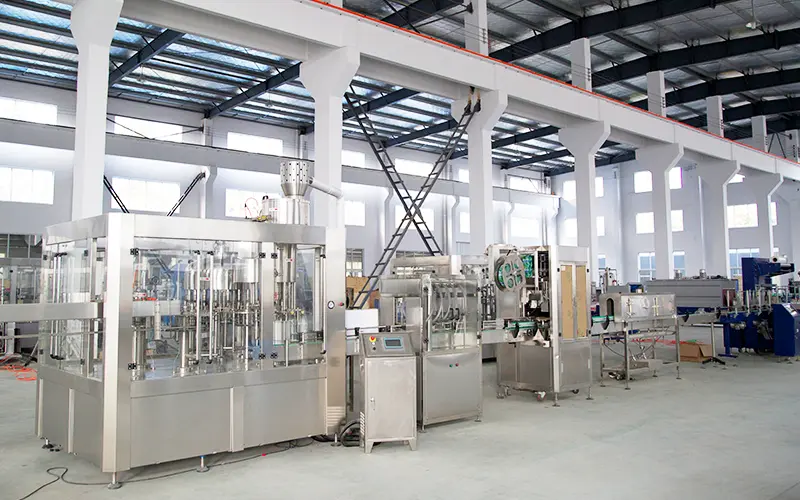
- High-speed rotary fillers: 36,000 – 72,000 bottles/hour. For example, Chinese brands like Navan and Kingmachine offer competitive cost-performance advantages.
- High-end equipment (e.g., Krones, GEA) often achieves OEE exceeding 95%, meaning less downtime and higher output, but at a higher cost.
Changeover time is another critical metric. New servo-driven machines allow tool-free changeover in under 20 minutes – ideal for co-packers and multi-SKU producers.
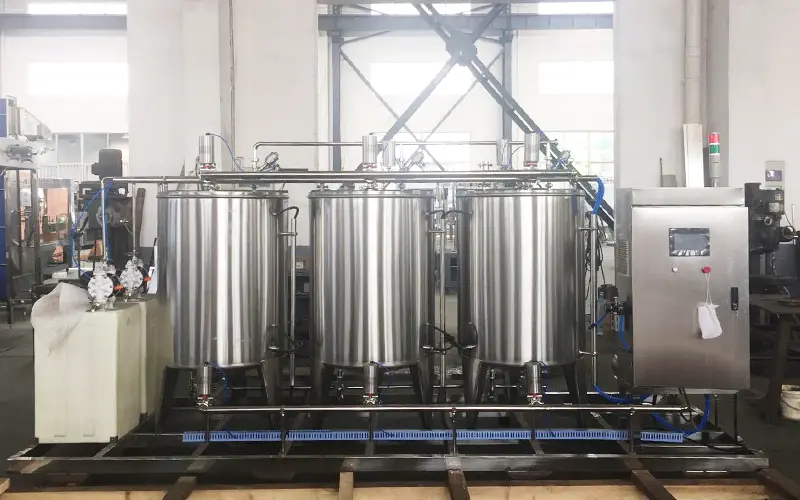
2.3 Clean-in-Place (CIP) & Sterilize-in-Place (SIP)
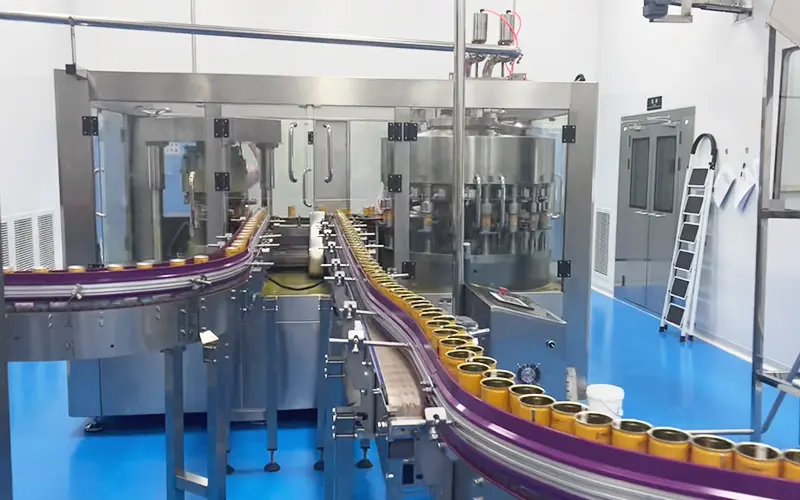
No more manual disassembly. A modern automatic beverage filling line comes with pre-programmed CIP/SIP cycles that:
– Circulate hot water, caustic, and acid through all product-contact surfaces
– Reduce downtime between batches from hours to 30–45 minutes
– Eliminate cross-contamination risks
Real-world impact: A juice manufacturer switching to a CIP-equipped filling line reduced cleaning labor by 70% and significantly extended product shelf life.
2.4 Aseptic / Cold Fill Technology
For high-acid and sensitive beverages (juices, teas, plant-based drinks), aseptic filling is a game-changer. The product is sterilized separately (e.g., UHT), then filled into pre-sterilized bottles in a sterile environment – no preservatives needed.
Market trend: According to Datastring Consulting and other sources, due to consumer demand for natural, clean-label drinks, the aseptic filling machine segment is growing at approximately 8.9% CAGR.
3. Smart & Sustainable Features for East African and Russian Markets
Your production line needs to adapt to unique local operating conditions. Customers in East Africa and Russia prioritize reliability, low maintenance costs, tolerance to power fluctuations, and high cost-performance. The following features are especially important:
3.1 Design for Unstable Power Supply
- Wide voltage input (380V ±20%) and surge protection to reduce damage to PLCs and servo drives from voltage fluctuations.
- Optional diesel generator compatibility mode – automatically switches during grid power outages to keep critical filling operations running.
3.2 Rugged Mechanical Construction
- Thickened stainless steel body and anti-corrosion coating to withstand high heat, high humidity, or cold environments (Russian winters).
- Modular design: Wear parts (seals, valve diaphragms) can be replaced locally without special tools.
3.3 Simplified IoT & Remote Diagnostics
- Basic remote monitoring: Send critical alarms (e.g., over-temperature, low liquid level) via 2G/4G (or satellite) – no high-speed internet required.
- Offline diagnostic kit: The supplier provides a USB diagnostic tool preloaded with fault codes, allowing local electricians to troubleshoot step by step.
3.4 Practical Water & Energy Savings
- Water recovery system: Rinse water is simply filtered and reused for initial rinsing, reducing water consumption to below 1.5 liters per thousand bottles (not closed-loop but practical).
- Low compressed air consumption: Pneumatic components are designed for low power consumption, compatible with common small air compressors (7.5kW class) found locally.
East Africa market reference: In East Africa, facilities using filling lines with power-adaptive design have been able to maintain high OEE even under unstable grid conditions, with significantly extended maintenance intervals. Major beverage companies in Kenya have already invested in hot-fill juice production lines, and international suppliers are providing advanced filling solutions for the region.
4. Return on Investment (ROI) Reference – Illustrative Examples
The following two examples are typical ROI analyses based on industry averages. They are intended to help you estimate the potential benefits of upgrading your filling line. Actual results will vary depending on specific configurations, product types, and operating conditions.
Example 1: Typical Upgrade Path – Manual to Semi-Automatic
- Before: Manual filling, approx. 300 bottles/hour, product loss approx. 3%, 5 operators
- After: Semi-automatic beverage filling machine – approx. 2,000 bottles/hour, loss reduced to 0.8%, only 2 operators
- Reference investment range: Approximately $30,000–50,000 USD
- Typical annual savings: Labor approx. $15,000–25,000 USD + product savings approx. $5,000–10,000 USD
- Typical payback period: Approximately 12–18 months
Example 2: Typical Upgrade Path – Old Pressure Filler to High-Speed Rotary Filler
- Before: Old pressure filler, approx. 8,000 bottles/hour, OEE approx. 65–70%, frequent leaks due to aging equipment
- After: New rotary pressure filler (approx. 30,000–40,000 bottles/hour), OEE up to 90–95%, with automated CIP
- Reference investment range: Approximately $350,000–500,000 USD
- Typical annual benefit: Increased output brings approx. $250,000–350,000 USD additional revenue + maintenance cost reduction approx. $30,000–50,000 USD
- Typical ROI over 3 years: Approximately 100–130%
Key takeaway: Upgrading your automatic beverage filling line is not a cost – it is a high-return investment.
5. How to Choose a Reliable Beverage Filling Machine Supplier
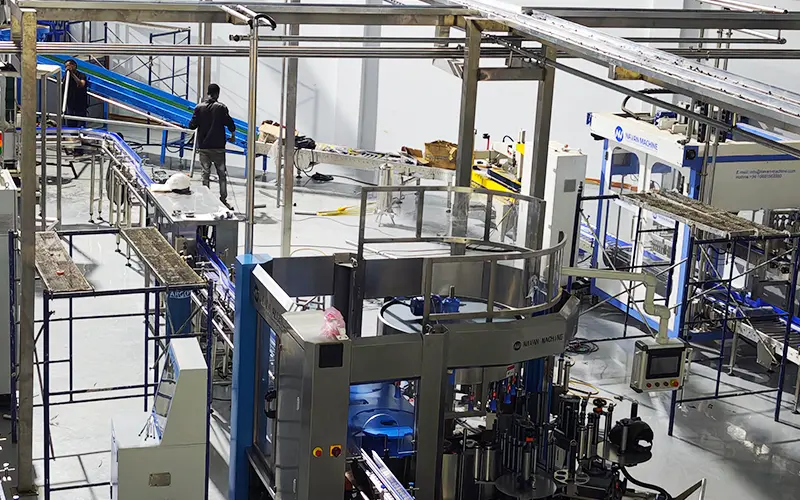
Your technology choice is only half the battle. A reliable beverage filling machine supplier ensures installation, training, spare parts, and after-sales support.
Supplier Evaluation Checklist
CriteriaQuestions to AskExperienceHow many similar lines have you installed in the last 3 years?Customization capabilityCan you accommodate our bottle size, product viscosity, and cap type?CertificationsCE, ISO 9001, compliance with local import standards (e.g., EAC certification for Russia)?Lead timeTypically 8–20 weeks; do you offer expedited options?Spare partsAre critical parts stocked locally? Or can you guarantee 48-hour shipment?Remote supportDoes the machine have IoT remote diagnostic capabilities? Do you provide offline diagnostic tools?
Red Flags to Avoid
- Supplier cannot provide a 3D layout of your line
- No reference list or unwilling to arrange a factory visit
- Vague warranty terms (aim for 24 months on mechanical parts)
- No solution for power fluctuation environments (especially important for East African / Russian customers)
Conclusion: Your Next Step to a High-Performance Filling Line
Modern beverage filling machines have evolved from simple gravity fillers into intelligent, hygienic, and data-driven systems. Whether you need a beverage filling machine supplier for a new plant or an upgrade to your existing automatic beverage filling line, the key is matching the filling principle to your product and selecting a partner with reliable after-sales support that adapts to local conditions.
Ready to improve your filling accuracy, cut waste, and scale production?
Contact our engineering team– we will provide a free line layout and ROI analysis within 48 hours.